Hello, I'm Simon, I study at Montmorency College in Springboard to a DCS : option prerequisites, to obtain the prerequisites to be able to pursue my studies in Science. With this glossary of 20 field-related terms and definitions, I want to help myself and others to better understand words related to science, for students who are new to this program to have a better understanding of what they're going to learn.
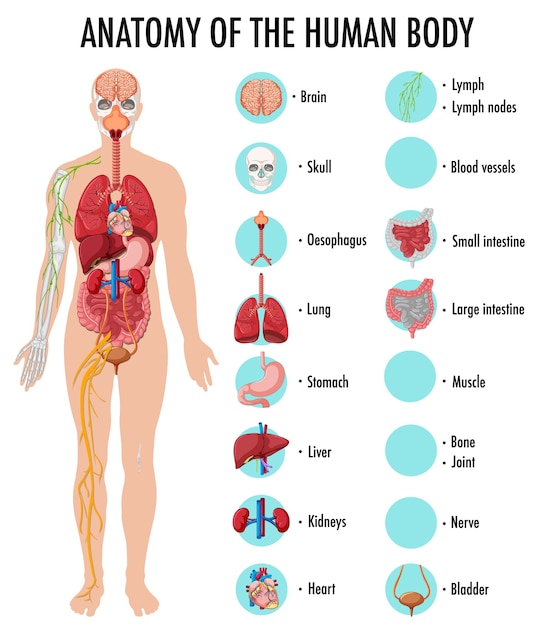
anatomy
noun
The branch of science concerned with the bodily structure of humans, animals, and other living organisms, especially as revealed by dissection and the separation of parts.
Example: Beside these, mechanics, anatomy and etc, are also used in robotic system.
fr: anatomie
asteroid
noun
a small rocky body orbiting the sun. Large numbers of these, ranging in size from nearly 600 miles (1,000 km) across (Ceres) to dust particles, are found (as the asteroid belt ) especially between the orbits of Mars and Jupiter, though some have more eccentric orbits, and a few pass close to the earth or enter the atmosphere as meteors.
Example: A large asteroid may collide with the Earth in the future.
fr: astéroïde
astronomy
noun
The branch of science which deals with celestial objects, space, and the physical universe as a whole.
Example: Their research centred around traditional concepts such as mechanics, optics, astronomy and planetary motion.
fr: astronomie
atom
noun
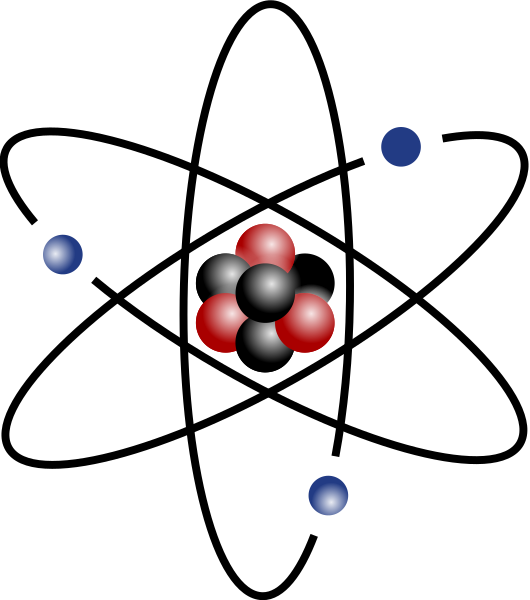
The basic unit of a chemical element.
Example: A normal atom exists with paired electrons orbiting around its central nucleus, while each pair moves in its own region of space.
fr: atome
biology
noun
The study of living organisms, divided into many specialized fields that cover their morphology, physiology, anatomy, behavior, origin, and distribution.
Example: Schopenhauers' Will provides a unique 'stop gap' between a religious explanation of the world (where a deity is the reason and motivation behind all of life) and a scientific explanation (where biology and physics give rise to a theory of evolution).
fr: biologie
cell
noun
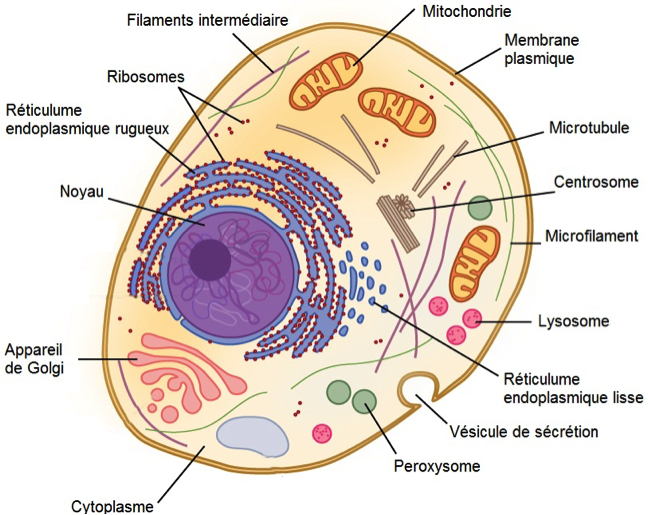
A cell is a mass of cytoplasm that is bound externally by a cell membrane. Usually microscopic in size, cells are the smallest structural units of living matter and compose all living things. Most cells have one or more nuclei and other organelles that carry out a variety of tasks.
Example: As the new genetics and IVF enable us to manipulate life at the level of the cell, advancements in new medical technologies are also being applied to the body at a macro level, through the restoration, substitution or manipulation of organs and tissues.
fr: cellule
chemistry
noun
The branch of science that deals with the identification of the substances of which matter is composed; the investigation of their properties and the ways in which they interact, combine, and change; and the use of these processes to form new substances.
Example: The International Union of Pure Applied chemistry (IUPAC) has produced standard codes for the nucleotide and amino acid ambiguity codes.
fr: chimie
density
noun
Degree of consistency measured by the quantity of mass per unit volume.
Example: A large area of free fluid in right iliac fossa with some low density echoes, consistent with a bleed (10.4 x 4.5cm)
fr: densité
gravity
noun
The force that attracts a body toward the center of the earth, or toward any other physical body having mass.
Example: The speed of the falling drop increases until the air resistance equals the force of gravity and the drop falls at a constant speed called its terminal velocity.
fr: gravité
health
noun
The state of being free from illness or injury.
Example: Concerning life style, the corpses can relate to us what every day life was like for the ancient Egyptians, what they ate, and their health, how far they traded for example.
fr: santé
magnetism
noun
A physical phenomenon produced by the motion of electric charge, resulting in attractive and repulsive forces between objects.
Example: The reduction of electricity and magnetism to one force governed by a few equations in Maxwell's theory of electromagnetism is in stark contrast to the many variables and interpretations required in astrology to predict aspects of human behaviour.
fr: magnétisme
molecule
noun
La plus petite partie d'un corps susceptible d'exister à l'état isolé en gardant les caractères de ce corps.
Example: This can be seen in water (H2O), which is the chemical interaction of one oxygen molecule and two hydrogen.
fr: molécule
organ
noun
A part of an organism that is typically self-contained and has a specific vital function, such as the heart or liver in humans.
Example: There is a risk that recurrent alcohol abuse will lead to alcoholic liver disease in the grafted organ and the additional problem of non-compliance with immunosuppression.
fr: organe
organism
noun
An individual animal, plant, or single-celled life form.
Example: But nowhere in these disciplines is there any talk of the relations between "evidence", "justification" or "knowledge", and there is no such thing as researching an organism's "true" or "correct" perception of its environment.
fr: organisme
physics
noun
The branch of science concerned with the nature and properties of matter and energy. The subject matter of physics, distinguished from that of chemistry and biology, includes mechanics, heat, light and other radiation, sound, electricity, magnetism, and the structure of atoms.
Example: They believed that sociology could be the queen of the sciences, it could emulate Newtonian physics and later Darwinian biology.
fr: physique
pressure
noun
Continuous physical force exerted on or against an object by something in contact with it.
Example: The slight extra pressure he applied to her hand
fr: pression
radiation
noun
The emission of energy as electromagnetic waves or as moving subatomic particles, especially high-energy particles which cause ionization.
Example: An 8m 2 solar collector absorbs solar radiation and transfers heat to the collector fluid, a water-glycol mix (Figure 1).
fr: radiation
stoichiometry
noun
The relationship between the relative quantities of substances taking part in a reaction or forming a compound, typically a ratio of whole integers.
Example: Lastly, the ligand association with manganese(III) stoichiometry.
fr: stoechiométrie
velocity
noun
The speed of something in a given direction.
Example: Even if the particles were orbiting they should still emit radiation as they change velocity.
fr: vélocité
wave
noun
A wave is the propagation of a disturbance producing in its passage a reversible variation of the local physical properties of the medium.
Example: A sound wave entering the cochlea sets the stereocilia in motion, causing them to slide along one another and exert pressure on tip links, which are fine filaments connecting the stereocilia.